
Why, though?
Orange on the right, turquoise on the left: Ben laughs at Leo’s shoelaces. But there is a good reason for the two colours. A story about courage, understanding and asking questions.
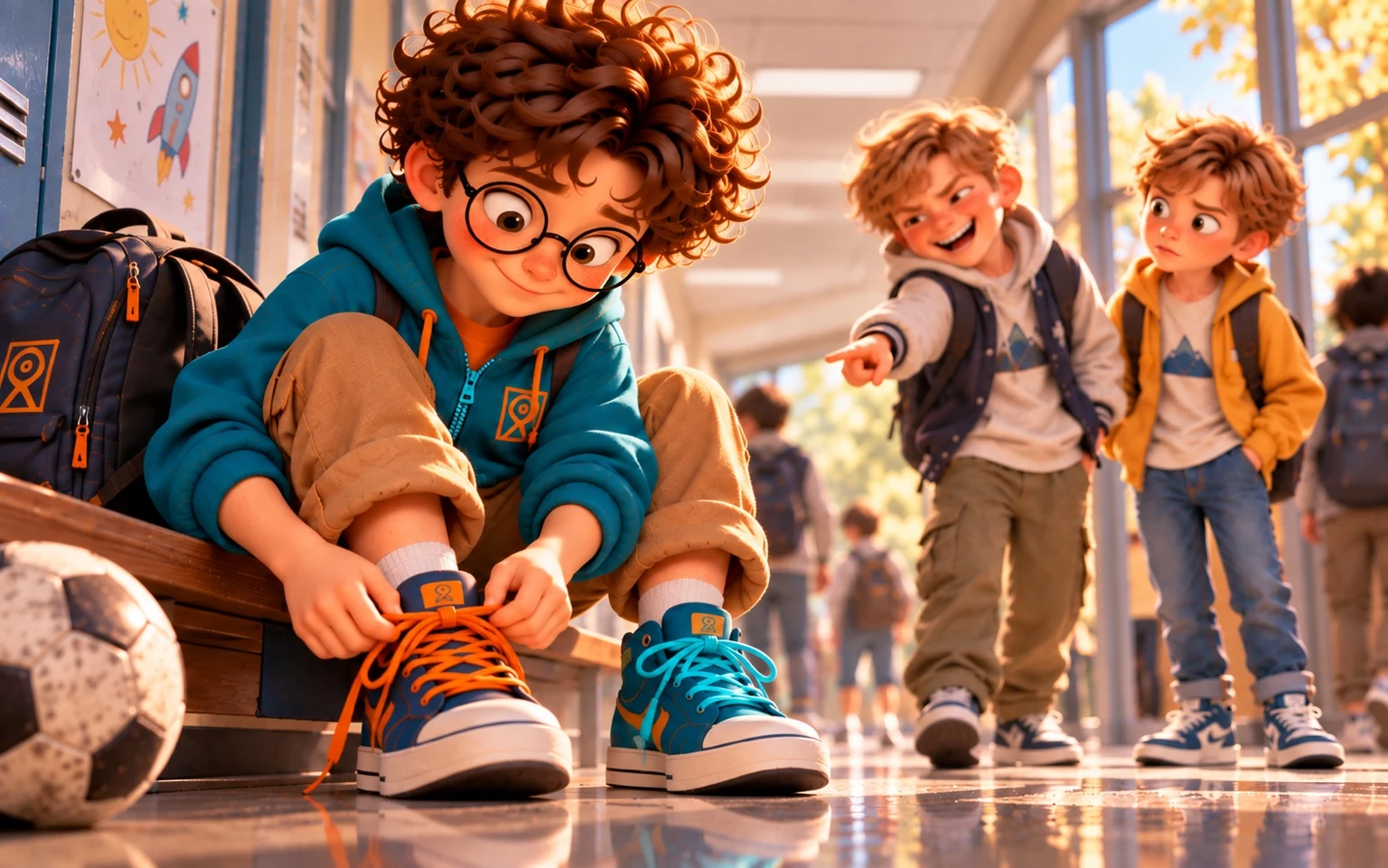
On Monday morning, there was a new boy in Leo’s class.
His name was Ben, and he sat two desks away.
At the first break, Mika showed him the playground. Leo went along too.
Ben was quite funny.
At least at the start.
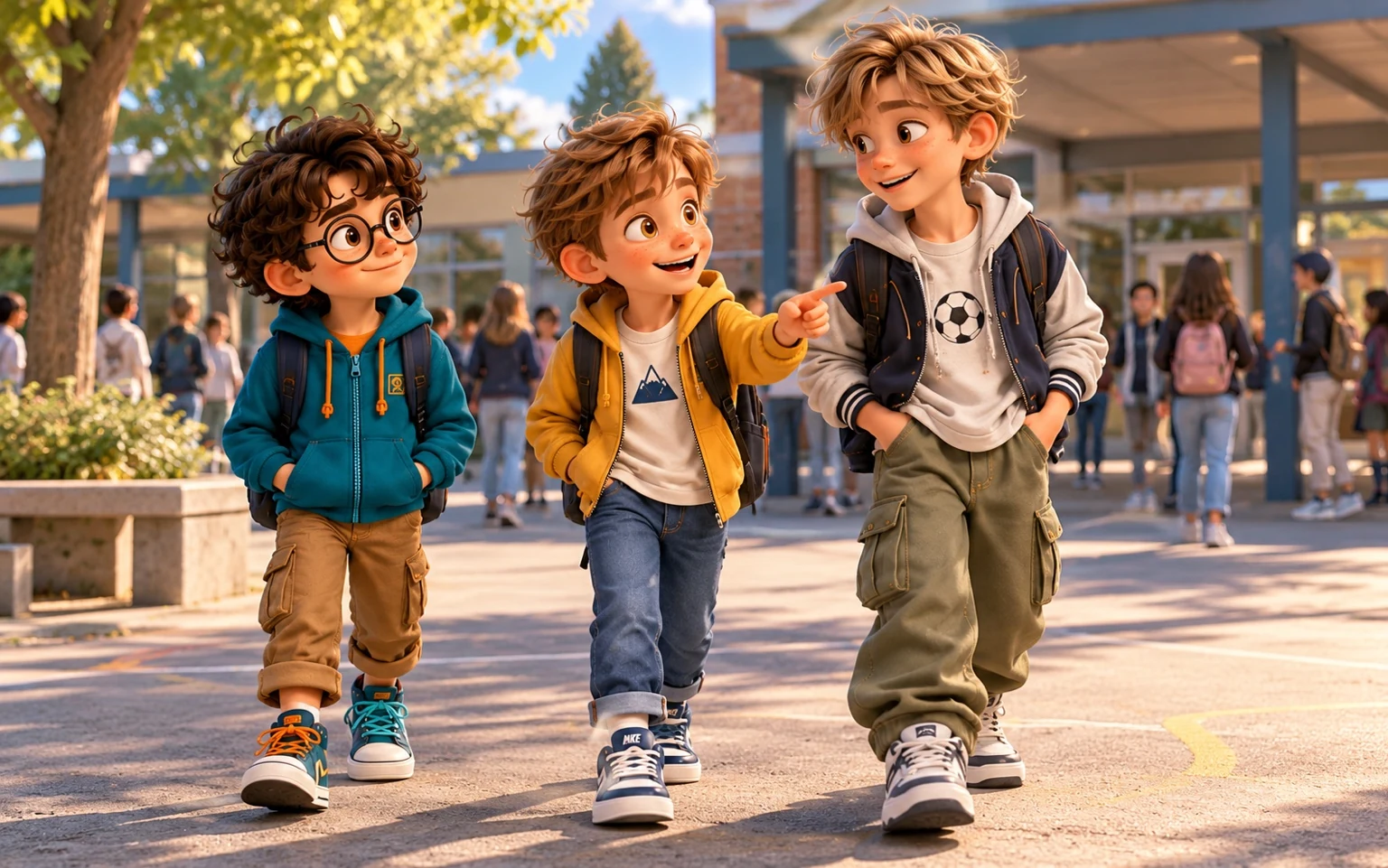
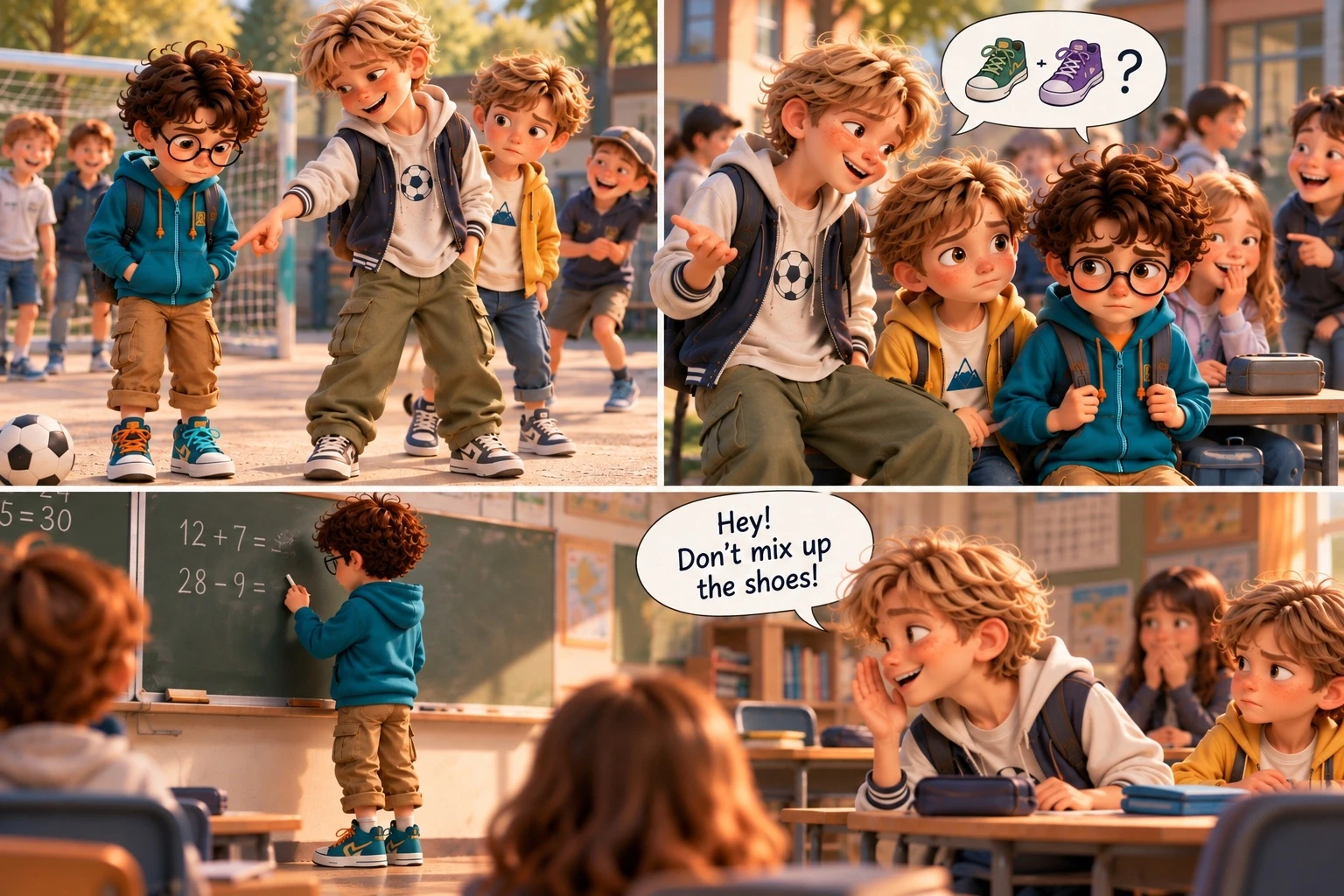
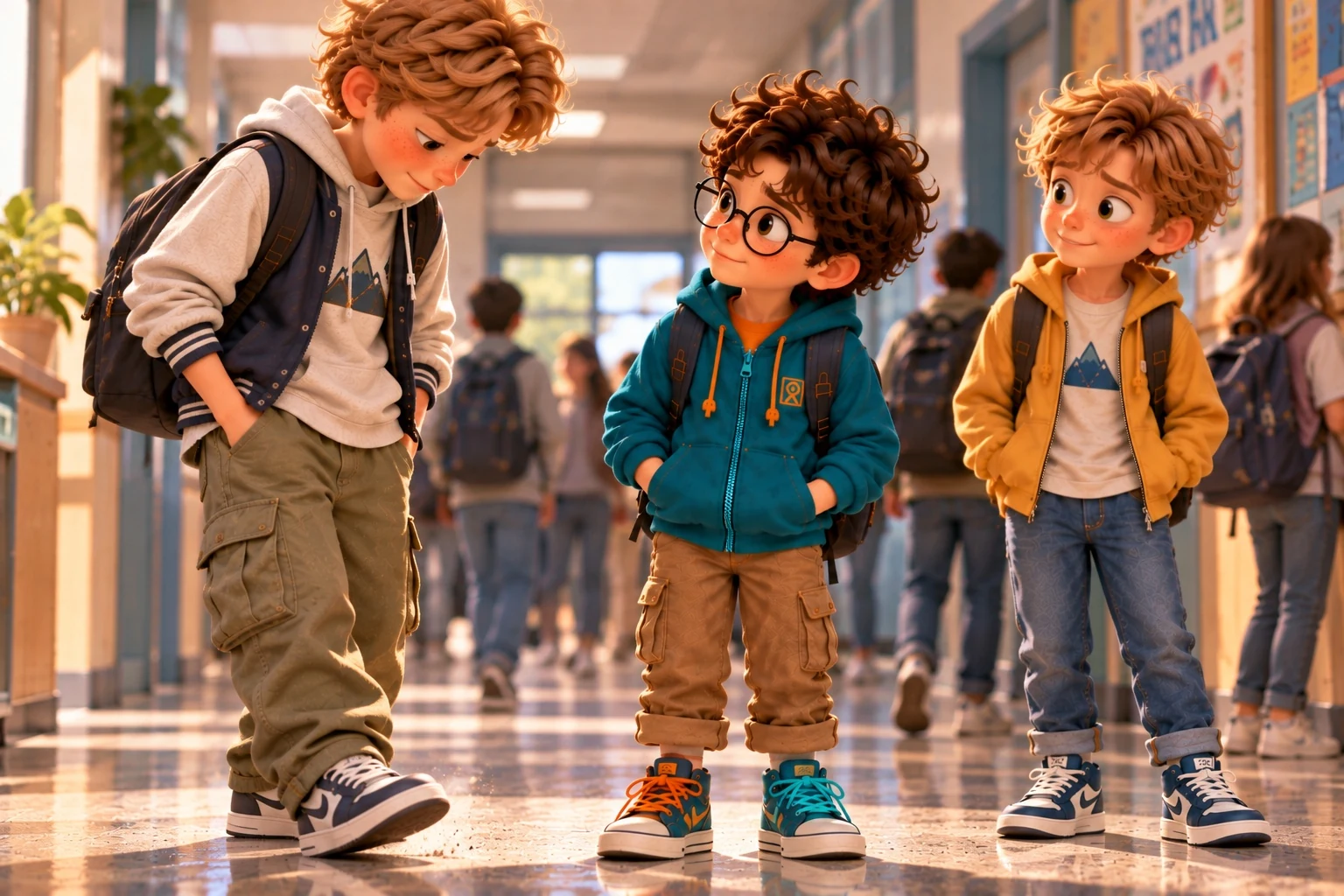
As they walked down the stairs, Ben suddenly noticed Leo’s shoes.
The laces on his right shoe were bright orange.
The ones on his left were turquoise.
Ben grinned.
“Did you put your shoes on in the dark this morning?”
Leo looked down.
“No.”
That was all he said.
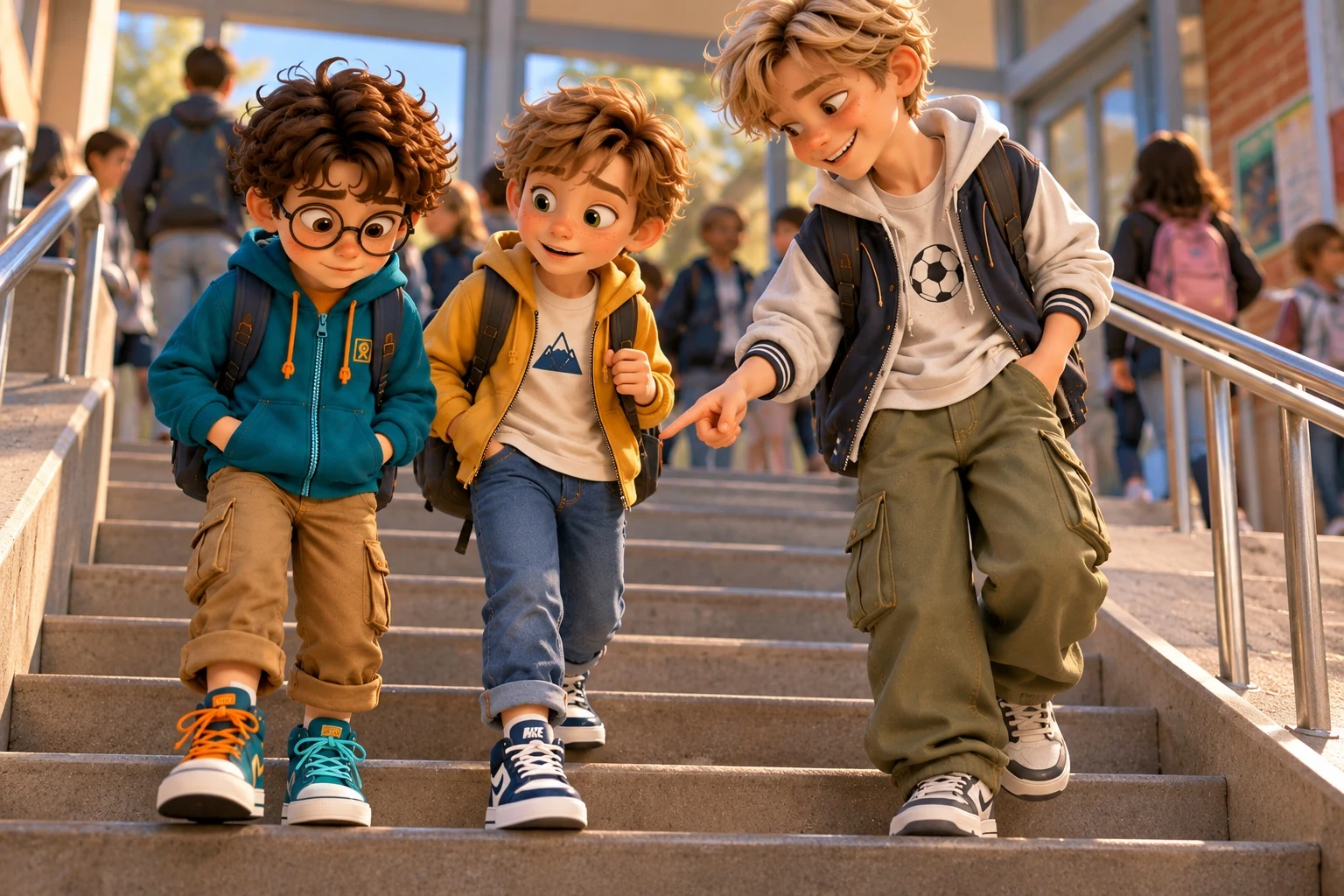
The next day, Ben noticed the laces again.
“They still don’t match!”
This time, he said it so loudly that two other children turned round.
“Maybe he couldn’t find two the same,” Ben said, laughing.
One child giggled.
Leo pretended he hadn’t heard.
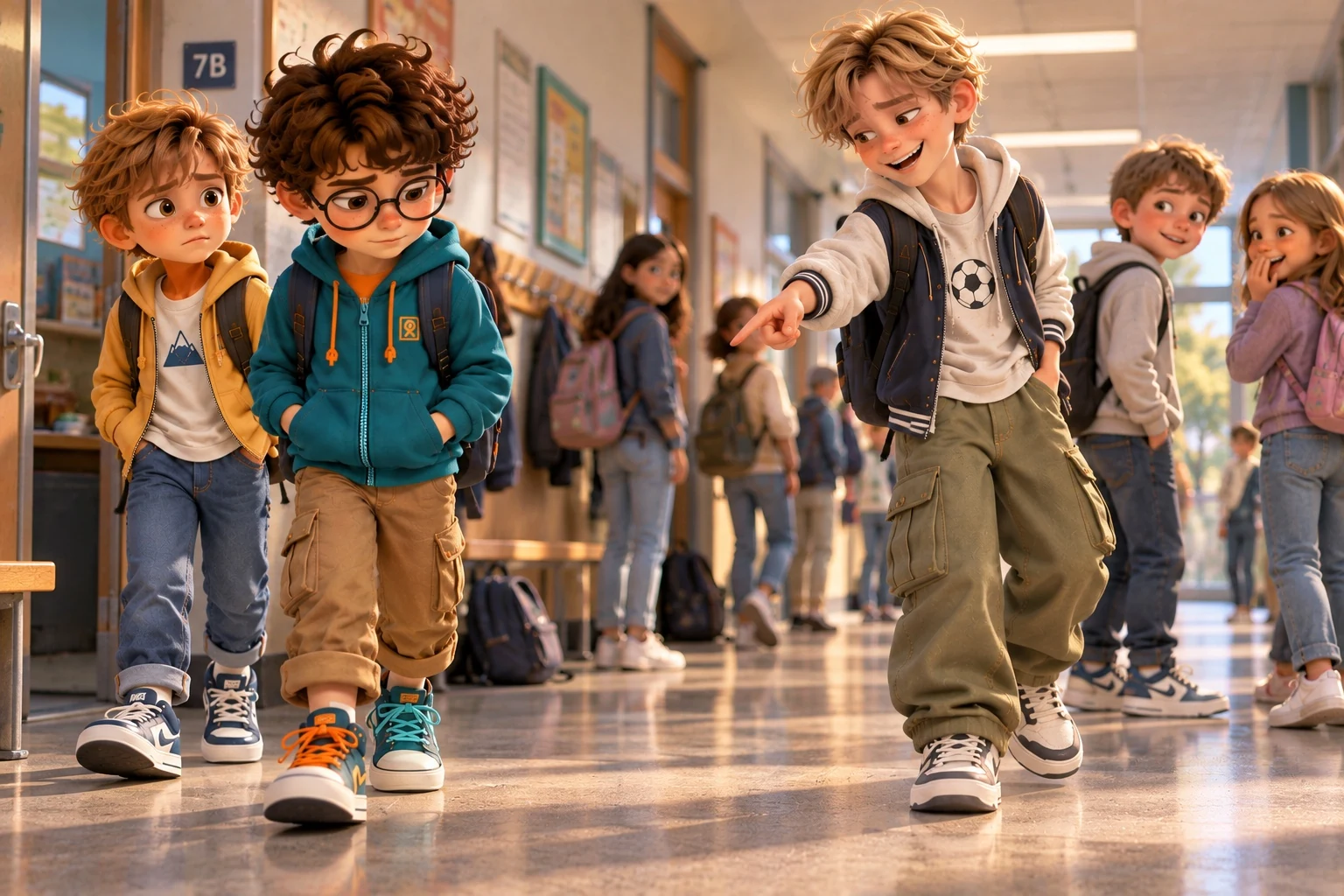
But Ben didn’t stop.
During football, he pointed at Leo’s shoes.
At break time, he asked if Leo would wear green and purple tomorrow.
And when Leo went up to the board in class, Ben whispered:
“Careful! Don’t mix up your shoes.”
A few children laughed.
Leo didn’t.
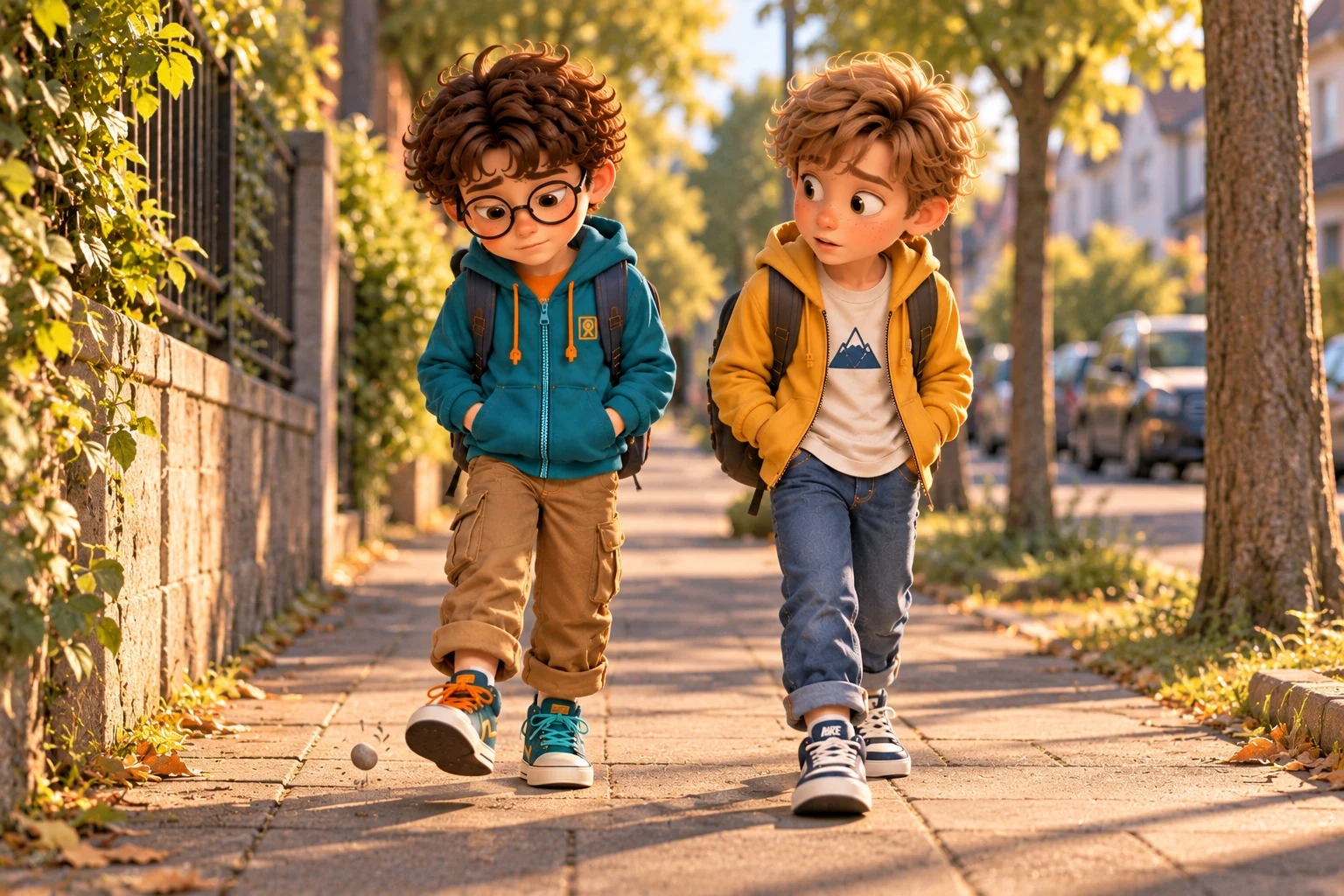
After school, Leo walked home with Mika.
They usually talked about all sorts of things.
Today, Leo just kicked a little stone and watched it bounce along the pavement.
“Ben is annoying,” said Mika.
Leo shrugged.
“I don’t care.”
But that wasn’t quite true.
Really, Leo felt sad.
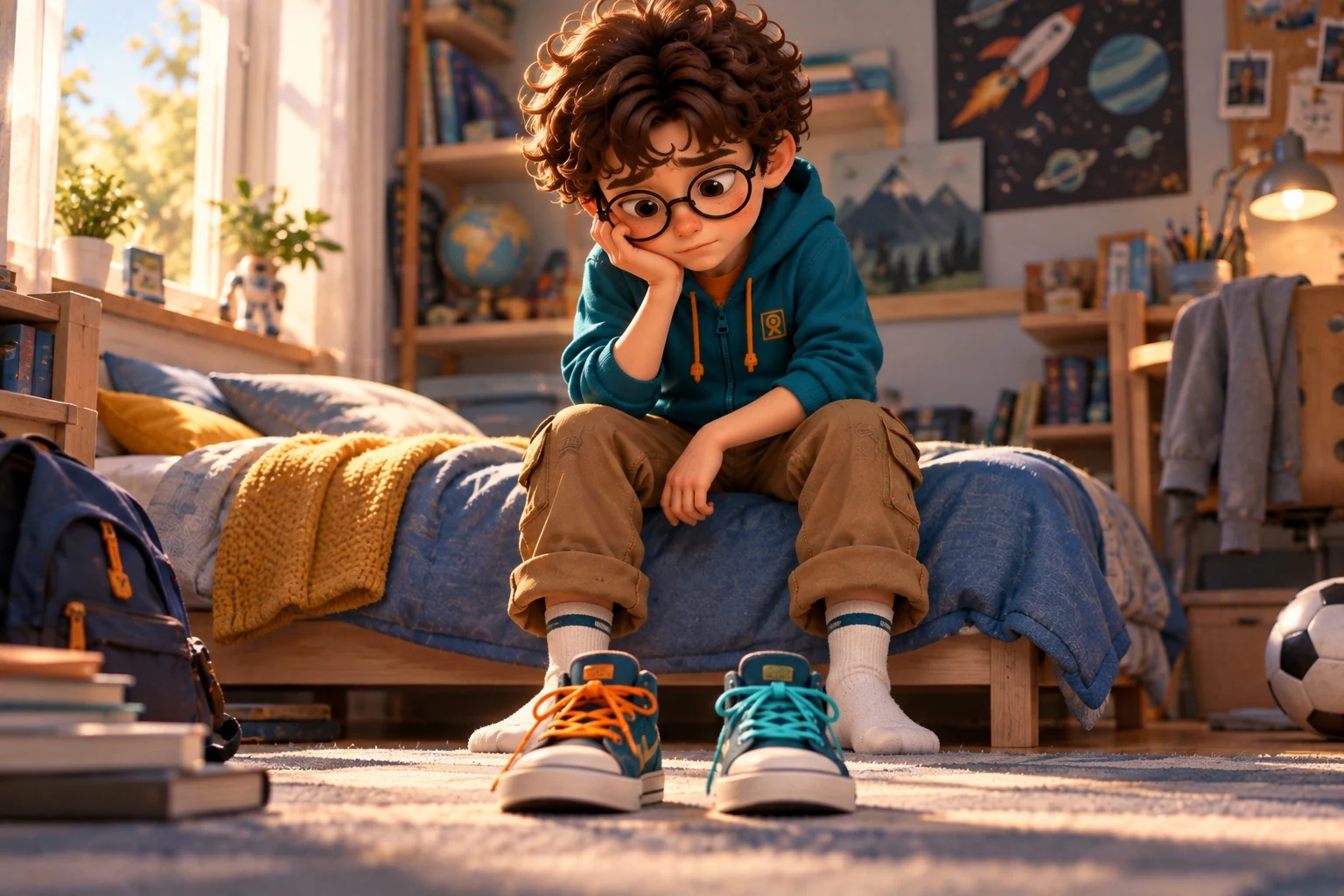
The next morning, Leo sat on the edge of his bed.
His shoes were in front of him.
Orange on the right.
Turquoise on the left.
He looked at the laces for a while.
Maybe he should just use two the same.
Then Ben would finally stop.
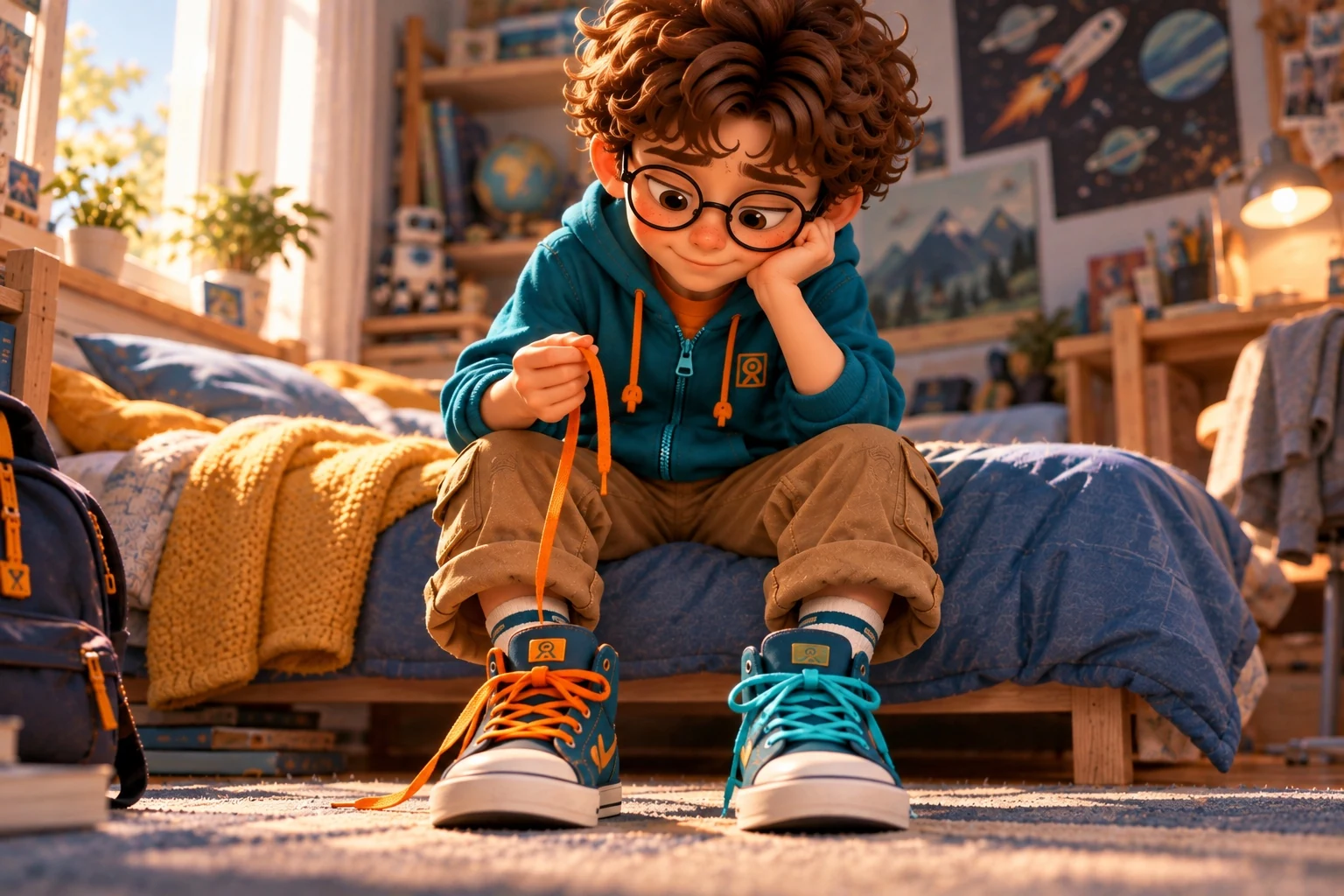
Leo had already pulled the orange lace halfway out of his shoe.
Then he stopped.
He liked his laces.
And there was a reason they were different.
Leo pushed the lace back in.
Orange on the right.
Turquoise on the left.
That was just right.
At school, it didn’t take long.
Ben spotted the shoes before the first lesson.
“Leo! You still haven’t managed it!”
Leo stopped.
Mika stopped beside him.
This time, Leo didn’t walk on.
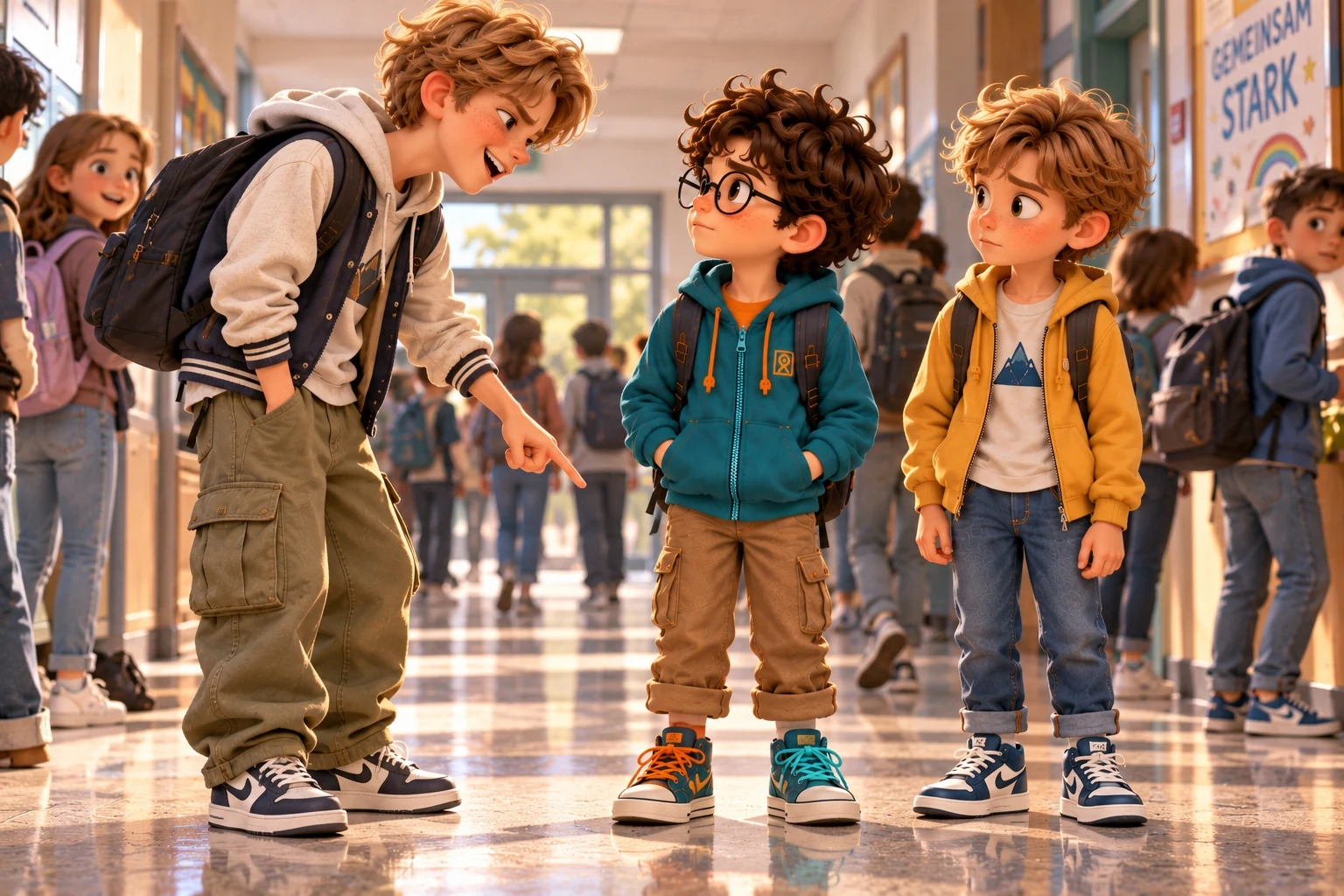
“Haven’t managed what?” asked Leo.
Ben pointed at his shoes.
“To find two laces that match.”
Leo looked down at his shoes, then back at Ben.
“Why does it bother you, though?”
Ben hadn’t expected that.
He shrugged.
“It just looks funny.”
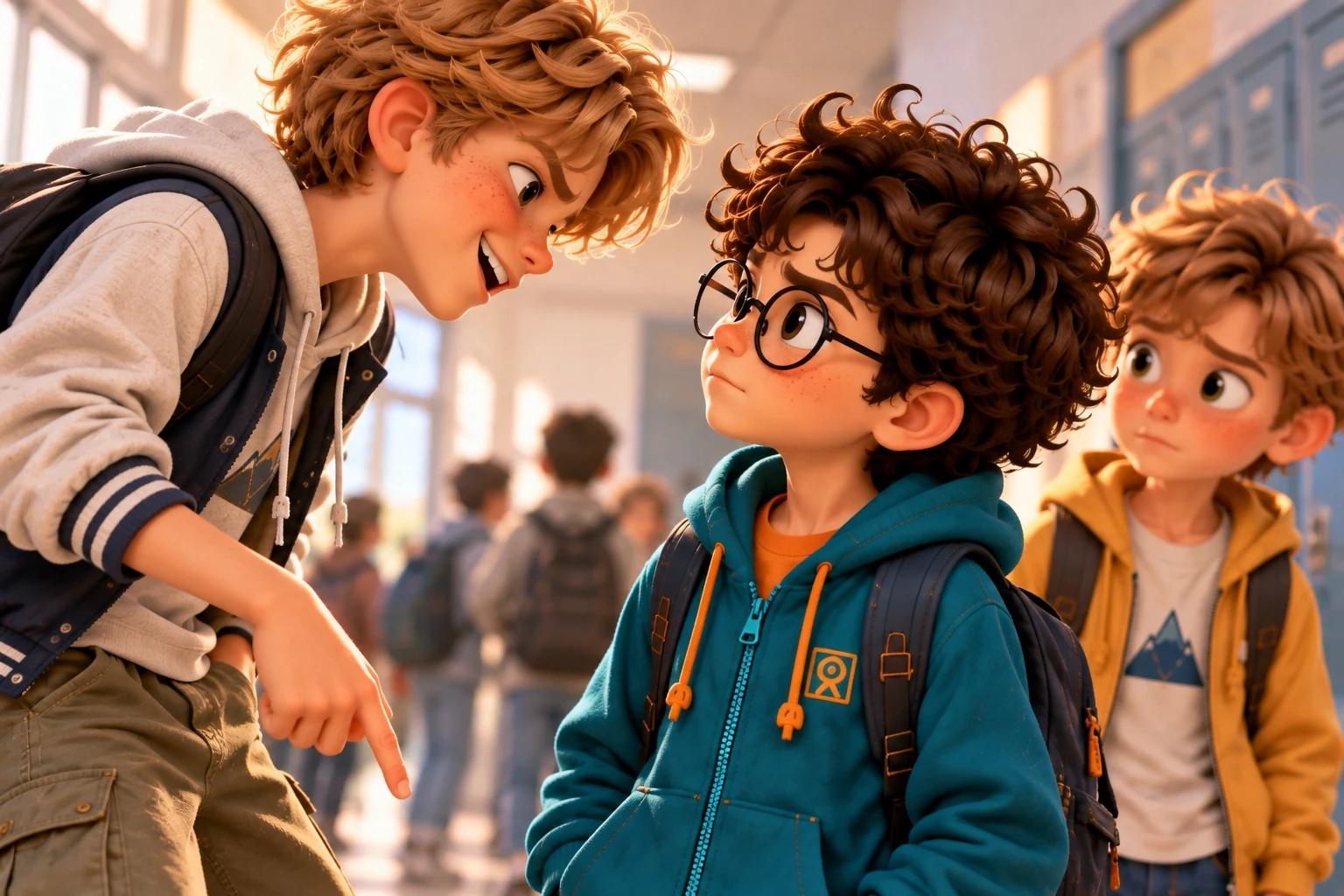
Leo was quiet for a moment.
Then he pointed to his right shoe.
“Sometimes I need a bit longer to work out which side is right and which is left. That’s why my laces are different.”
Leo pointed to his right shoe.
“Orange means right.”
Then to his left.
“Turquoise means left.”
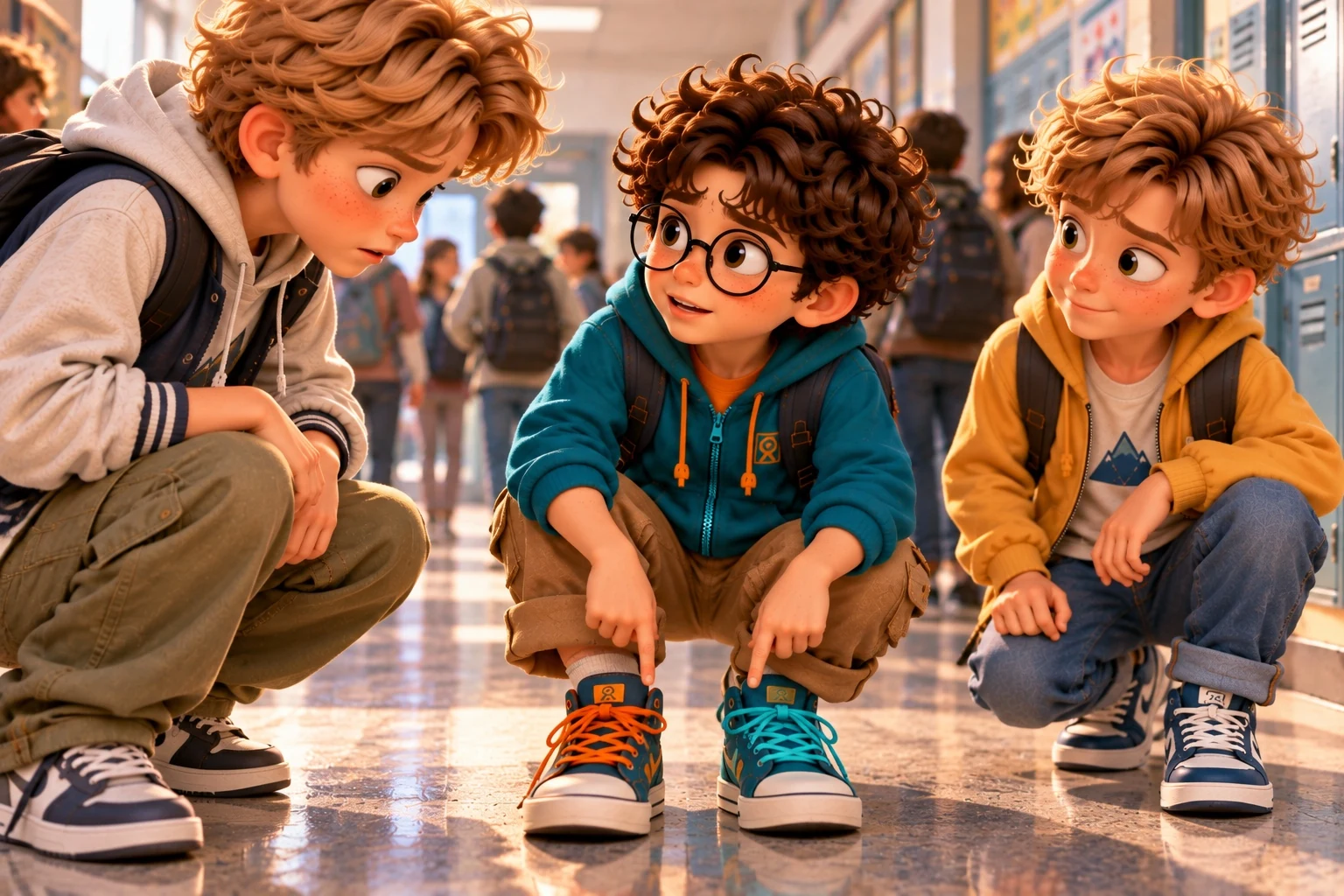
Ben looked at Leo’s shoes.
Then back at Leo.
He hadn’t expected that.
Mika grinned. He thought Leo’s idea was quite clever.
Ben thought so too.
After all, Leo only had to look down to know which side was right.
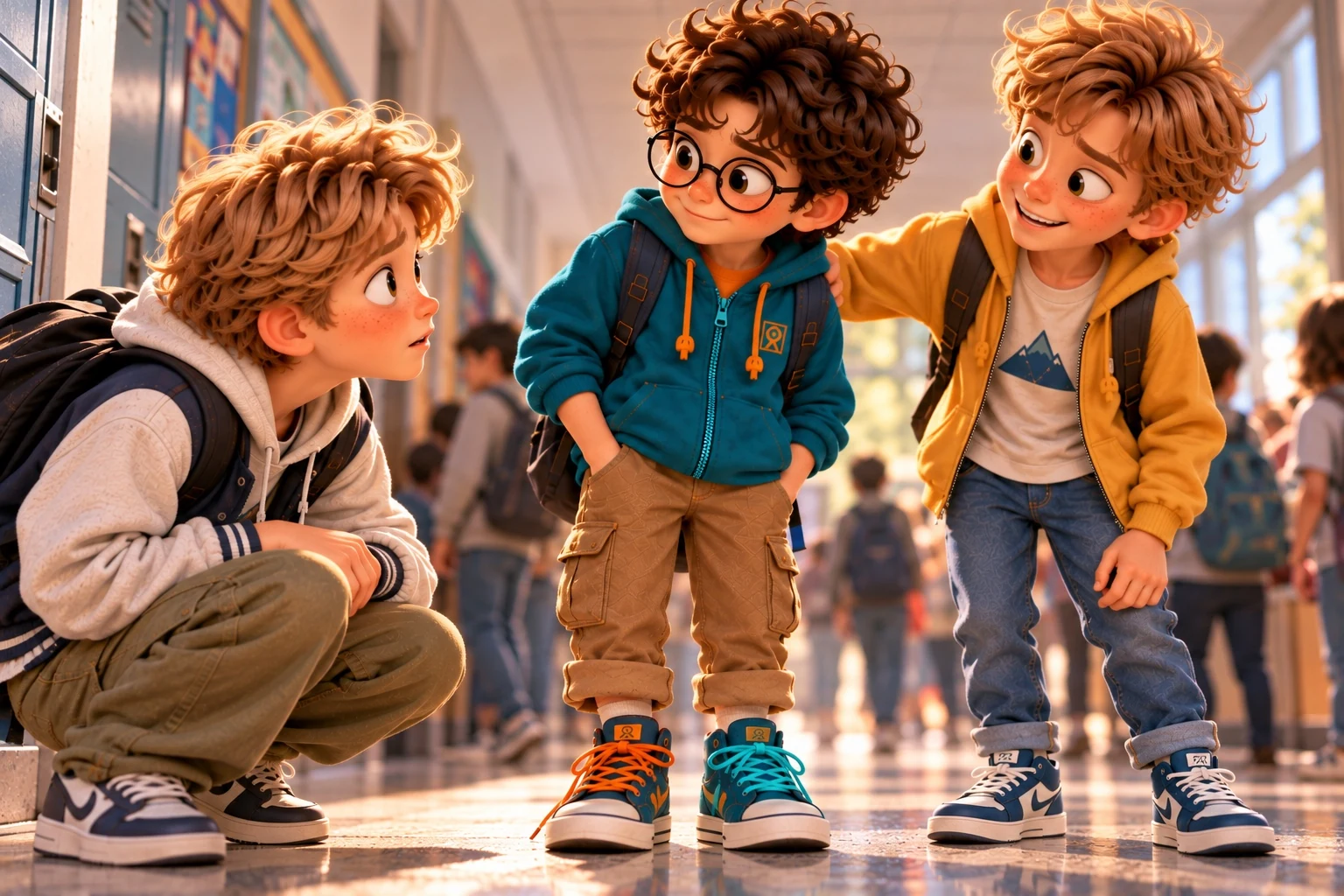
Ben scuffed his shoe along the ground.
“I didn’t know that.”
“You didn’t ask,” said Leo.
Ben went a little red and said quietly:
“Sorry.”
Leo nodded.
As far as he was concerned, that was that.
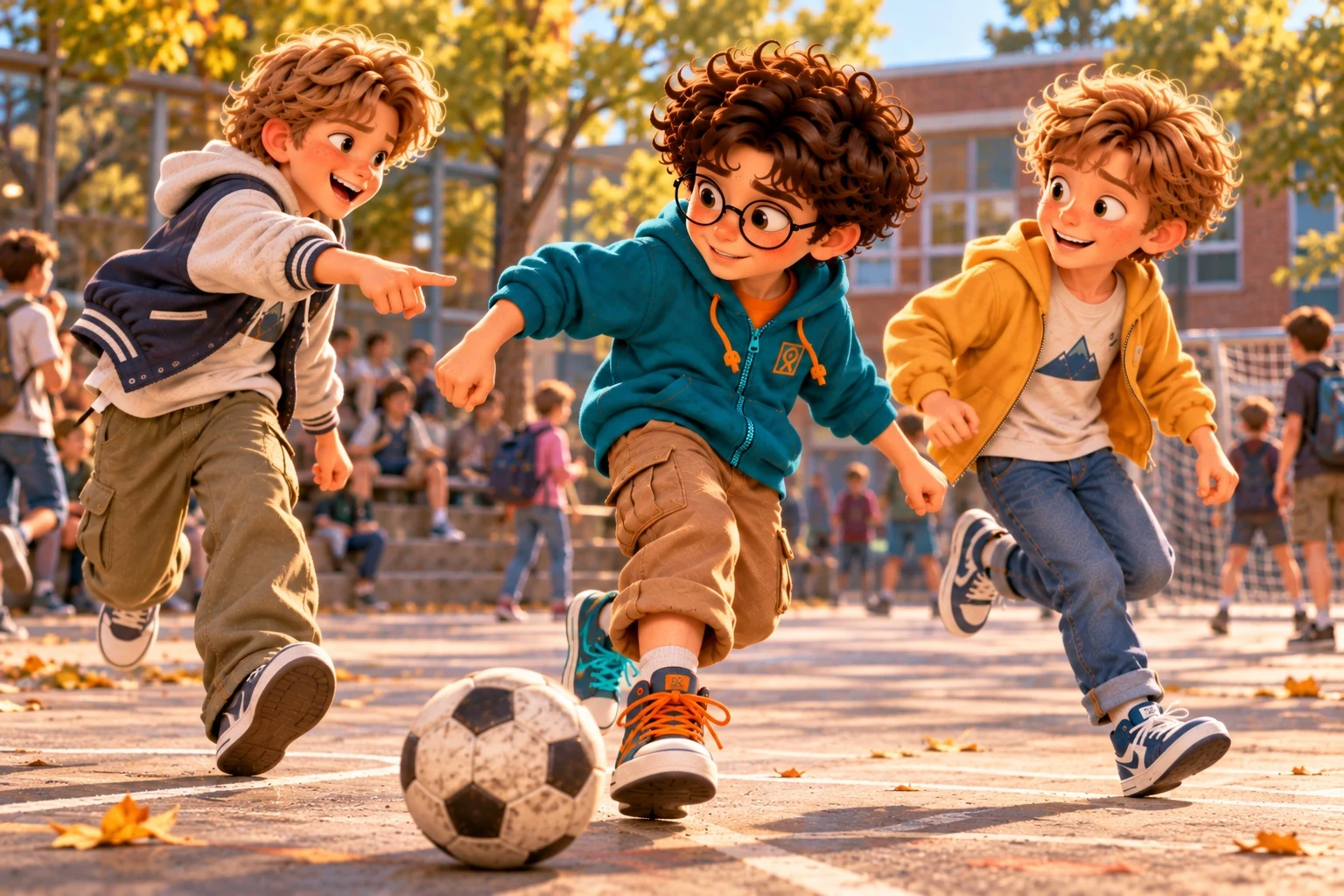
At the next break, Leo and Mika played football.
Ben stood at the side for a while. Then he came over and asked if he could join in.
Of course he could.
Soon, Ben called out:
“Leo! Right!”
Leo glanced at his orange lace, turned the right way and passed the ball.
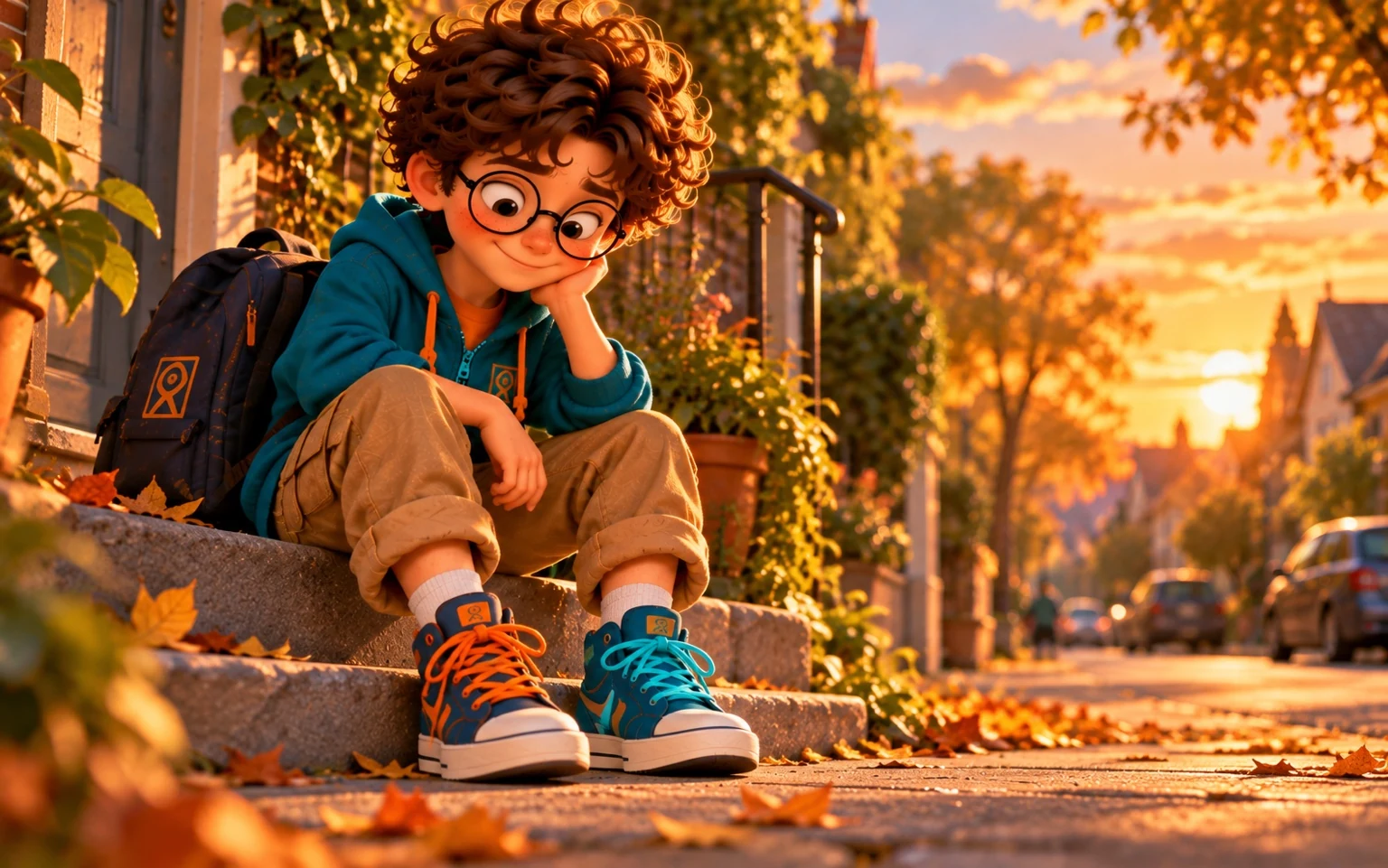
On the way home, Leo thought back to that morning.
He had almost changed his laces just so no one would laugh at them.
But they were just right as they were.
Orange on the right.
Turquoise on the left.

Ben had seen the colours. But he hadn’t known the reason for them.
Nothing about Leo’s shoes had really changed.
Ben just knew more now.
Leo smiled.
Sometimes it’s better to ask first, before you laugh at something — or someone.
Read as a team
Grown-ups read the small print. Children read the large print.
Your colours. Your own good reason.
Wusel mistake hunt
What has the AI muddled up this time?
My pictures are made with the help of artificial intelligence. Not every little detail stays the same — so I’ve turned those mix-ups into a spotting game.
In picture 4, Leo is at the board. Look — the colours have swapped sides! Orange is on the left and turquoise is on the right. The AI has got a little muddled.
Leo is pulling the lace out of his shoe — but the bow is still neatly tied! The AI has left a bow where it shouldn’t be.
Wusel detectives, look closely!
Why does AI make mistakes like these?
🕵️ For little Wusel detectives
AI makes each picture from scratch, a bit like drawing it all over again. That means a tiny detail might change when it should stay the same. So look closely: AI can make mistakes in pictures, words and answers. Check things yourself, or ask a grown-up to help.
🔎 For grown-up Wusel companions
AI generates each picture afresh, using descriptions and reference images. It does not automatically preserve every detail from the previous picture. Colours, objects, clothes and small shapes can change even when they should stay the same. Careful instructions and checking help, but they do not always prevent every mismatch. That’s why I turn these little mix-ups into a game to explore together.
Ready to explore a little more?
Tap a question for a little idea to talk about.
Why does Leo wear two different shoelaces?
The colours help him tell right from left: orange means right, turquoise means left. It’s Leo’s own way of remembering.
What could Ben have done differently?
He could have asked kindly why Leo’s laces were different. Then he would have understood without making Leo feel sad.
What can you do if someone keeps teasing you?
You can say, “Please stop. I don’t like that.” You can also ask a friend or a grown-up for help. You don’t have to handle it on your own.